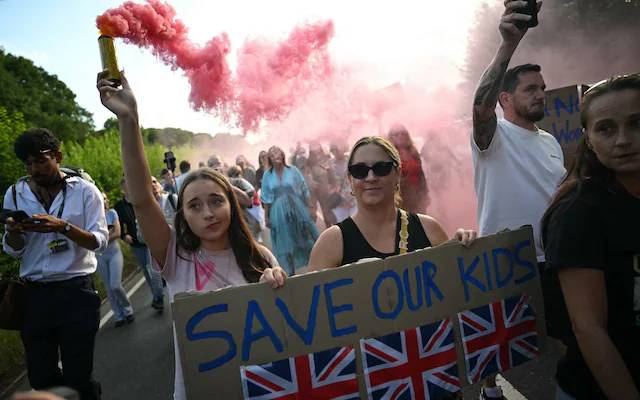

Deputy Prime Minister Angela Rayner has cautioned that a growing distrust in politicians is being fueled by two main concerns: immigration and economic deprivation. She delivered this message during a cabinet briefing which outlined the causes behind last summer’s unrest across England.
Root Causes of Public Disillusionment
Rayner identified multiple contributors to social instability:
- Economic insecurity and deindustrialisation in former industrial regions.
- High levels of immigration, including illegal arrivals, intensifying pressure on communities and public services.
- Technological disruption and rising societal isolation, as many spend extended time alone or online.
- Declining institutional trust, evidenced by low confidence in government bodies and media The Guardian.
She highlighted that almost all of the worst-affected areas during the riots were located in England’s most deprived communities, with 17 out of 18 worst-hit places classified among the most economically disadvantaged.
Context and Government Response
Rayner’s remarks come amid warnings of potential renewed disturbances. The anniversary of the tragic Southport child murders, which triggered last year’s riots, is approaching—and far-right misinformation is stoking tensions at asylum seeker hotels in places like Epping and Diss.
Politicians from Reform UK, including Nigel Farage, have amplified public anxieties, predicting broad social breakdown if concerns remain unaddressed. In response, Rayner affirmed the government’s commitment to a longer-term social cohesion initiative, while acknowledging the urgency of tackling the issues that gave rise to unrest.
Official statements from 10 Downing Street confirmed that migration—especially illegal routes—alongside inflation and social fragmentation, are seen as deeply undermining social unity Reddit.
Rayner’s Vision Forward
Rayner insisted the government must evolve with a clear plan that reaffirms Britain’s identity as a successful, multi‑ethnic, multi‑faith nation while addressing citizens’ everyday concerns. She stressed equal opportunity and upward mobility as pillars of rebuilding public trust.
Although her cohesion project lacks a fixed timeline, ministers are especially cautious in the run-up to potential flashpoints—such as protests anticipated at asylum housing sites and around memorial events tied to last year’s riots.
Summary Table of Key Points
| Issue | Why It Matters |
|---|---|
| Immigration | Public perceives it placing strain on local services and cohesion |
| Deprivation | Economic inequality correlates with areas that experienced unrest |
| Social isolation | Increased online time undermines face‑to‑face community bonds |
| Institutional mistrust | Widespread skepticism toward political and media institutions |
Why This Matters
Political significance: Rayner’s comments illustrate Labour’s critical concern about retaining support in struggling regions, where Reform UK is gaining traction by addressing migration and economic themes more aggressively.
Social implications: The government hopes that better cohesion policies—rooted in fairness and integration—can counter intimidation from extremist narratives and ease community tensions.
Timing: With upcoming protests and the anniversary of deadly events on the horizon, authorities are particularly sensitive to populations feeling neglected or unheard.